Research & Questions
Where Did the Crime Take Place?
In researching the neighborhood where the crime may have taken place, there were three primary factors for me to consider: where were there active el lines in New York in 1957, what neighborhoods were considered slums at this time, and which slums had tenements in them? This would allow me to find an intersection of all three criteria that would serve as a place for the crime to be committed.
Where Were the Active El Lines?
I found multiple sources in my research indicating that the el trains last ran in New York in 1955, which would be two years before the events of this play occurred:
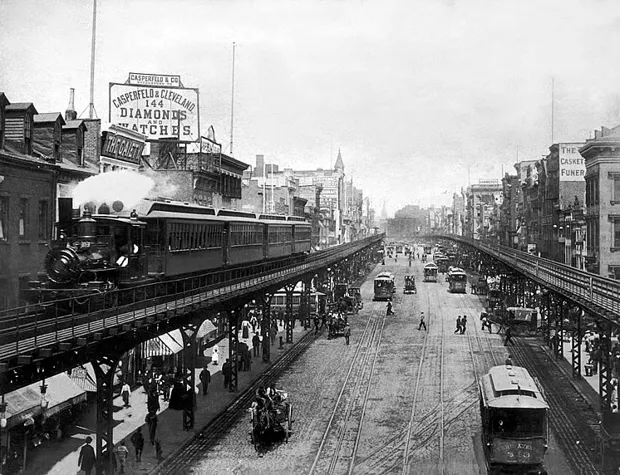
After the city completed the purchase of the IRT and BMT in 1940, other elevated tracks began to come down, with much of the Ninth Avenue El demolished that year. The Third Avenue line persisted the longest, with many stations in operation until 1955.
https://ny.curbed.com/2018/6/27/17507424/new-york-city-elevated-train-history-transportation
In the early evening of May 12, 1955, a train pulled out of Lower Manhattan’s Chatham Square, near City Hall, bound for upper Manhattan and the Bronx via Third Avenue. It was the last run of the Third Avenue elevated, and the last time a train ran up a large chunk of Manhattan east of Lexington Avenue for six decades.
https://www.bloomberg.com/news/articles/2016-12-22/remembering-manhattan-s-el-trains
However, I also found a source that there were Multiple-Unit Door Control cars running on elevated lines until 1957, which would mean that they were potentially still running during the crime:
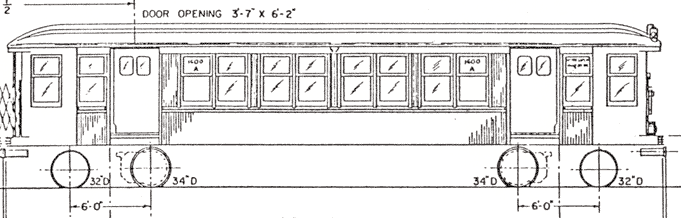
In 1950, the “Q” fleet was transferred to the Third Avenue Elevated and lighter-weight trucks from IRT composite cars were fitted under the cars. The final change to the appearance of the “Q” fleet came in 1957, when they were transferred to the Myrtle Avenue Line and their railroad roofs were lowered in height so that they could make it through the subway to the Coney Island shop complex. They were finally retired at the cessation of Myrtle El service between Broadway and Jay Street in 1969.
https://www.nycsubway.org/wiki/The_BMT_Fleet_(Elevated,_Subway,_Experimental)
This discrepancy in research is very puzzling for me, especially since if the lines were discontinued in 1955, there is no way that the el was roaring past the window of the apartment while the murder was being committed and even if the crime was committed before 1957, we would not have been able to look through the windows of a passing elevated train during the trial. Finally, it is impossible that this show could have taken place before the el trains were shut down because My Fair Lady did not debut on Broadway until 1956. I have found more sources stating that the el lines were shut down in 1955 than the latter claim, but for the sake of this research I will operate under the assumption that a “Q” fleet car was active on the Third Avenue Elevated at the time the crime was committed because of the necessities of the timeline listed above. Using this, I began to look at the route of the Third Avenue Elevated and figure out where slums were along this route.
Tangent: Where is the Case Happening?
The first thing I had to look into was whether the New York Court of Appeals (the highest court in the state) utilizes juries in their trials, which seems strange but influences where I’m looking for slums. If they don’t, this trial would have had to occur in a circuit court and to be in the city, I have to look for slums in New York City rather than New York state. To figure this out, I used the nycourts.gov website to find the court structure. I found that the Court of Appeals only uses justices because it is not a trial court. However, the New York Supreme Court (which is actually below the Court of Appeals) serves felonies in New York City. The crime would have exceeded a city court, which can only handle misdemeanors and civil cases, so this is the most likely court for this case to have been tried in.
Slums in New York City
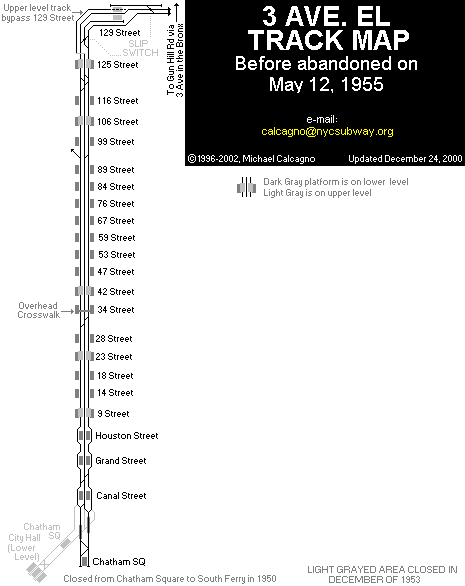
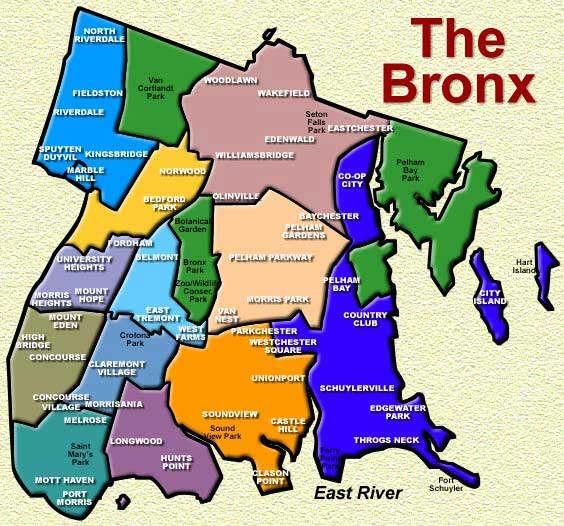
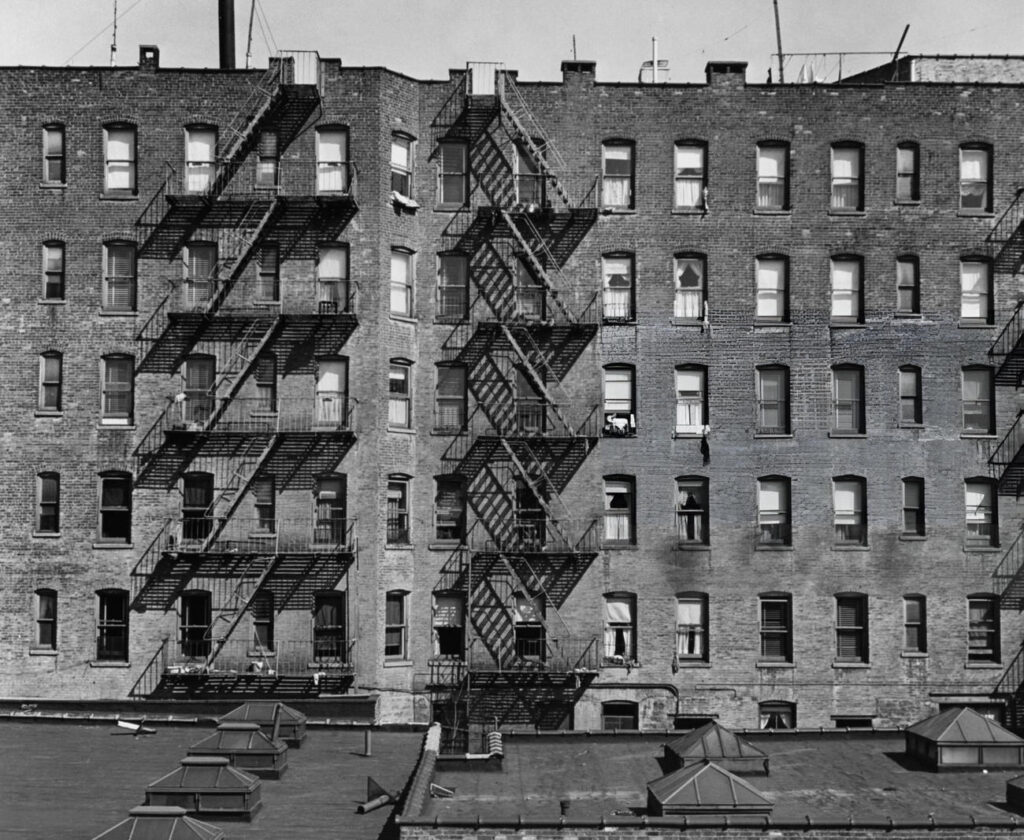
Having found a court that this trial likely occurred in, I was able to look at slums in New York City. I used a map of the Third Avenue El and found that it ran primarily through The Bronx and Manhattan in New York City. The slums that I found for these areas were the South Bronx, Five Points, and San Juan Hill. Next, I checked to see which of these the Third Avenue El ran through. The Third Avenue El was also known as the Bronx El, so it definitely ran through the South Bronx. Neither Five Points nor San Juan Hill fall along Third Avenue, so any dwellings in these areas would not have been right next to the el. This left me with the South Bronx, but I wanted to find a specific neighborhood that would have been plausible for the boy to live in. For this, I looked at the neighborhoods on Third Avenue to see where the el train would have been. This left me with Mott Haven, Melrose, Belmont, and Tremont. Among these, I found that all of them were dominated by tenements, so these four neighborhoods are all realistic locations for the crime. This cemented the South Bronx as the location and also allowed me to look at demographics. Based on the residents of the time, the boy was most likely Italian, Irish, or German if he lived in Mott Haven or Belmont and either Black or Puerto Rican in Tremont and Melrose. From my research, I found that the further South, the more gang violence and crime there was, so I am inclined to move forward working with Mott Haven or Melrose because they are much more southern.
Serving on a Jury in 1957
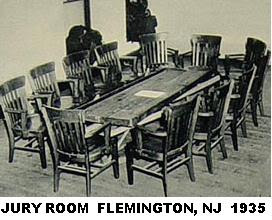
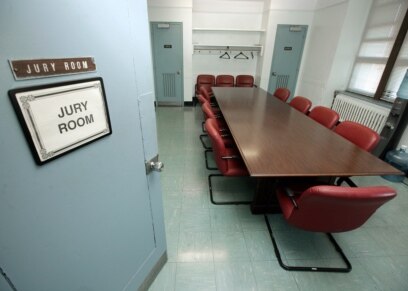
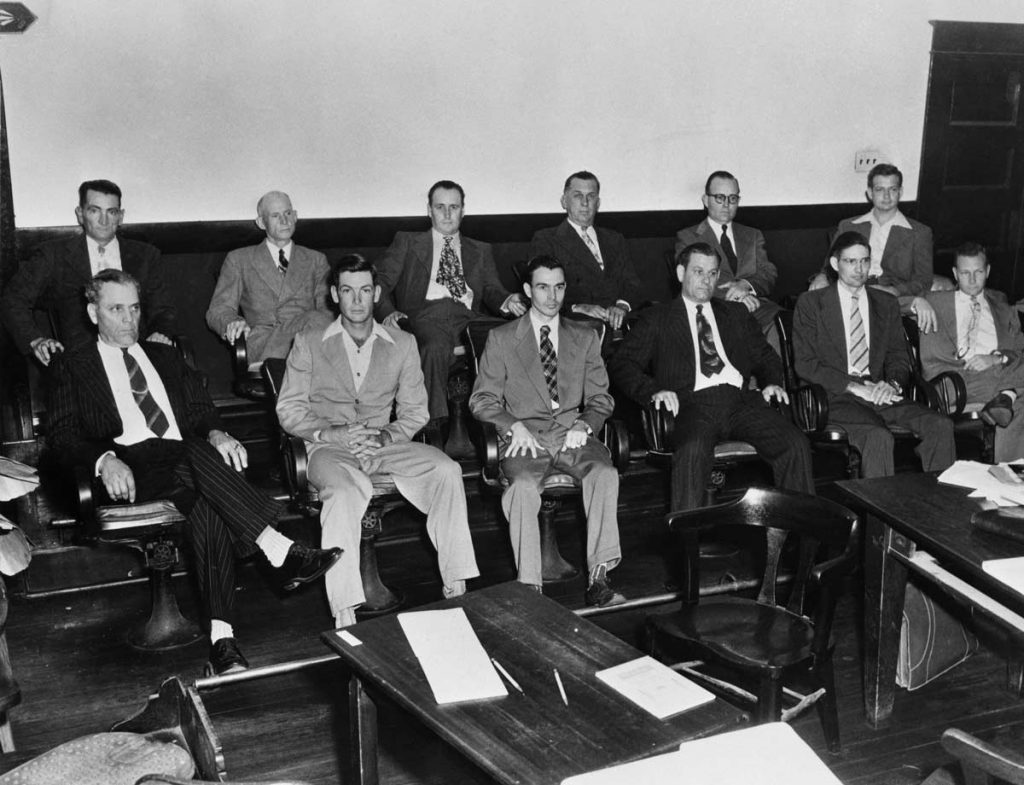
How similar was serving on a jury in 1957? Some of the most interesting things I found were differences from the modern jury system in the state of New York. For example:
- Juries are now comprised of 6 individuals, reduced from the 12 we see in the play
- Jury duty can last for a maximum of 5 days rather than the weeks you could be called for in the 1950’s
- There was no compensation for jury duty, meaning you would have been foregoing pay for the length of the trial
Some other interesting things I found was that women were permitted to serve on juries in the state of New York beginning in 1937, but it was not until 1975 that they were automatically selected or that all preventative measures were removed. This means that every female juror would have had to volunteer for service on a jury. Additionally, it was not until 1986 that all preconditions for serving on a jury were removed (these often came in the form of literacy tests that were meant to exclude women and people of color). Due to these exclusionary constraints, most juries in the 1950’s would have been comprised of white men.
One significant resource I found was the Final Jury Instructions for the State of New York. While I don’t know what year this was written, it has some of the standards of jury duty that would have been important for us to know including the extent to which we can use inferential evidence and the definition of reasonable doubt. Given that this is something given to jurors now and there is a history of jury handbooks, it is not unlikely that we would have seen a document similar to this in the 1950’s. Some of the interesting facts are:
- 1. Some rules about evidence:
- – In evaluating the evidence, you may consider any fact that is proven and any inference which may be drawn from such fact, but this must be a logical flow drawn only from proven facts
- 2. Some rules about note-taking:
- – Any notes taken are only an aid to your memory and must not take precedence over your independent recollection.
- – Those jurors who choose not to take notes must rely on their own independent recollection and must not be influenced by any notes that another juror may take.
- – Any notes you take are only for your own personal use in refreshing your recollection.
- 3. Some rules about the foreperson:
- – Under our law, the first juror selected is known as the foreperson. During deliberations, the foreperson’s opinion and vote are not entitled to any more importance than that of any other juror.
- – This outlines the modern selection of a foreperson as the first juror selected, meaning I would have been assigned this position out of chance
- – Under our law, the first juror selected is known as the foreperson. During deliberations, the foreperson’s opinion and vote are not entitled to any more importance than that of any other juror.
Remaining Questions
One of the things that we did upon first returning to campus was come up with questions we still had about the text, for many of them, I was able to do research and find the answers which enhanced my knowledge of the world of the play. Some of them, however, will just have to fall under the suspension of disbelief
Answered Questions
Why was the storekeeper arrested for selling the knife?
Switchblades were outlawed in 1954 in the state of New York as an effort to reduce gang violence.
What hints do we have from the show that solidifies the time period?
My Fair Lady debuted on Broadway in 1956
The last electric chair execution in New York took place in 1963. Capital punishment was outlawed from 1965 through 1995 and then banned once more in 2004.
There are clues from the language that is use, specific phrases help define a time period (“and how”)
What are the mechanics of the field trip to the tenement?
The judge would have had to approve the outing, called a “jury view”
These outings were relatively rare, but were permissible
These most generally occur for high profile cases
Were jurors allowed to take notes?
They were permitted to take notes to help with their memory, but this was sometimes frowned upon and considered rude.
Unanswered Questions (& Some Theories)
How unique was the switch knife the boy bought?
Perhaps it was the only one he had in stock because the rest were sold out
It could be out of stock because of the ban on switch knives
It could be a tactic to sell more, scarcity motivation
How is Juror 8 allowed to bring in a switch knife?
She probably isn’t, this likely would have led to a mistrial
Not declared a mistrial because no one reports it
By the end of the show, we know that declaring a mistrial would result in a new jury and he mught be found guilty more easily.
What do we know about the boy’s identity?
The identity of the boy is purposefully left out, but based on the research I conducted, it is most likely that the boy was a European immigrant. Either Irish, German, or Italian.
Would we have been sequestered? How much would we know about the case?
It’s unlikely that we were sequestered unless the case was incredibly high profile (we pointed to the OJ Simpson trial as a case where sequestering occurred)
We would have been disallowed from consuming any media about the trial, or at the very least we could not use it to sway our decision
How high profile is the case? Would there be media coverage?
It’s hard to say, if it occurred in a trial court it might have lower visibility than an appellate court
It might have lower visibility because it took place in a slum and prejudices of the time would have labeled that commonplace
It could have potentially been used to fuel an anti-immigrant rhetoric that already existed in the period
Questions Fueling Character Development
What unions existed in 1957?
Typically, when I think of unions, I think of blue-collar jobs that require that representation to access fair wages. This did not strike me as one of the unions I would be part of based on my behavior and dialogue. I conceptualize myself as being of a higher class, so I looked into unions that might be associated with non-factory jobs. I found the Office & Professional Employees International Union which was established in 1945 and has a local chapter in New York City which was also open at this time. This also gave me some of the jobs I could potentially work in. I browsed the About Us tab and found a list of jobs that they represent. I was drawn to insurance because it seemed like a job that was well-paying, would have warranted a business degree, and would have had a lot of work in the city.
What neighborhoods provided single family homes in 1957? Which of these neighborhoods are upper or middle class?
The three boroughs of New York City that had single family homes were Queens, Brooklyn, and Staten Island. Among these, the specific neighborhoods I identified that were upper class were:
- – Kew Gardens, Queens
- – Jamaica Estates, Queens
- – Todt Hill, Staten Island
The neighborhoods I found were middle class were:
- – Whitestone, Queens
- – Flatbush, Brooklyn
- – Bay Ridge, Brooklyn
- – Great Kills, Staten Island
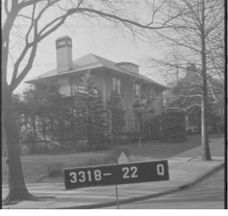
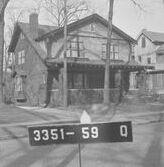
In the 1950 census, the median home price in New York generally was $10,152. The median Based on a median salary of $100/week ($5,200 annually) for male office workers in New York City which almost doubles the median salary for the US of $3,300 annually. This significant difference in the income would place me securely in the upper class based on my education and employment. This means that I was most likely to live in Queens and based on the volume of research I have found of the upper class neighborhoods at the time, Kew Gardens would have been the most likely place for me to reside. It was a planned garden community that was new and flourishing in the 1950’s. It had good access to public transport and would have provided me a convenient commute to get into Manhattan for work. I found a Facebook group titled “Grew Up in Kew Gardens” and was able to find some photos of single family homes from the period